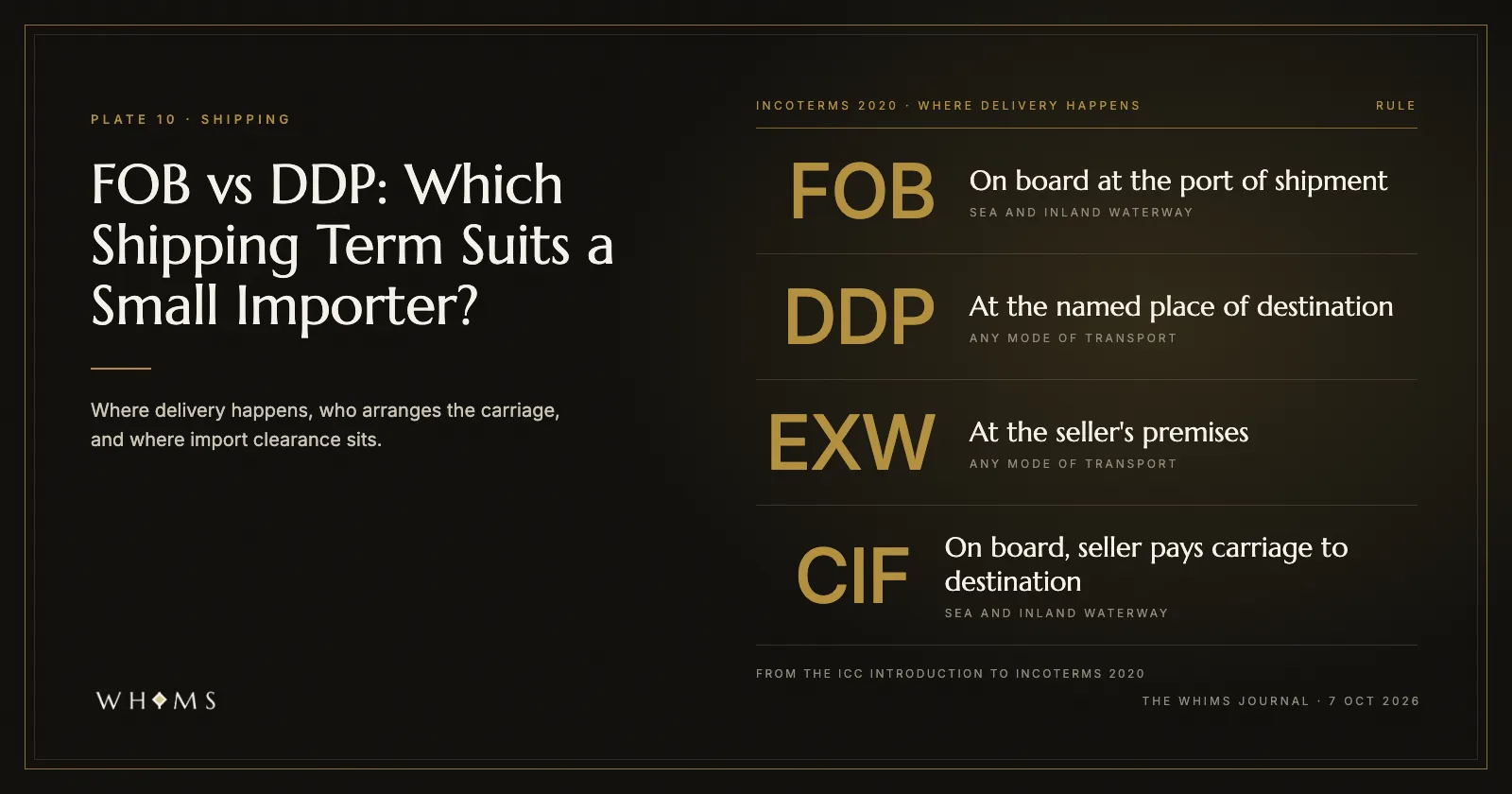

Two of the eleven Incoterms rules, and two different ways to divide the work between seller and buyer. Here is how they differ.
By WHIMS Editorial · Published · Last updated
FOB and DDP are two of the eleven Incoterms rules published by the International Chamber of Commerce. They divide the work between seller and buyer in different ways. FOB is an F rule, where the buyer arranges the main carriage. DDP sits at the seller-heavy end of the range, where the seller also handles import clearance.
FOB (Free On Board) means the seller delivers the goods by placing them on board the vessel at the named port of shipment, and risk passes to the buyer there. DDP (Delivered Duty Paid) means the seller delivers at a named place in the buyer's country and owes the obligations that can only be performed there, such as import clearance.
| FOB | DDP | |
|---|---|---|
| Full name | Free On Board | Delivered Duty Paid |
| Transport it suits | Sea and inland waterway only | Any mode or modes of transport |
| Where delivery happens | On board the vessel at the named port of shipment | At the named place of destination |
| Where risk passes to the buyer | At the port, once the goods are on board | At the destination, on delivery |
| Main carriage | Arranged by the buyer unless the parties agree otherwise | Delivery is at the destination, so carriage to it is on the seller's side |
| Import clearance | On the buyer's side of the journey | Owed by the seller |
One note from the ICC on containers. Where containerised goods are handed to a carrier before they are loaded on a ship, the ICC says the seller is better advised to sell on FCA terms than on FOB terms.
It depends on who you want to carry the import side. FOB suits a buyer who has a freight forwarder and wants to choose and manage the main carriage. DDP suits a buyer who wants the seller to bring the goods to a named place in their country and handle import clearance. Neither is better in general. They divide the work differently.
EXW (Ex Works) is a rule for any mode of transport where delivery happens at the seller's premises. CIF (Cost, Insurance and Freight) is a sea and inland waterway rule where delivery happens when the goods are on board at the port of loading, and the seller contracts and pays for carriage to the named destination. WHIMS agrees shipping terms with each buyer, and EXW and CIF are available on request.
No. Incoterms are contract terms that the buyer and seller choose to include. The ICC says that where they are incorporated, they apply to and govern only certain aspects of the contract of sale.
No. The ICC lists the time, place, method and currency of payment among the matters the rules do not deal with, along with the specifications of the goods. Agree those separately in the contract.
Yes, it is part of what each rule sets. Under DDP the seller owes import clearance. Under FOB the delivery happens at the port of shipment, so the import side sits with the buyer. Confirm the details with your customs authority or a licensed customs broker.
Shipping terms are agreed with each buyer, and EXW and CIF are available on request. Message us on WhatsApp to discuss the terms that suit your order.
Rules described from the ICC introduction to Incoterms 2020, checked on 7 October 2026. This is general information, not legal or customs advice. Terms for a particular order are agreed in the contract.