
Private Label Home Decor From India: How Brand Tags and Labelling Work
What private label and white label mean, how brand tags work with WHIMS, and what to plan about labelling.
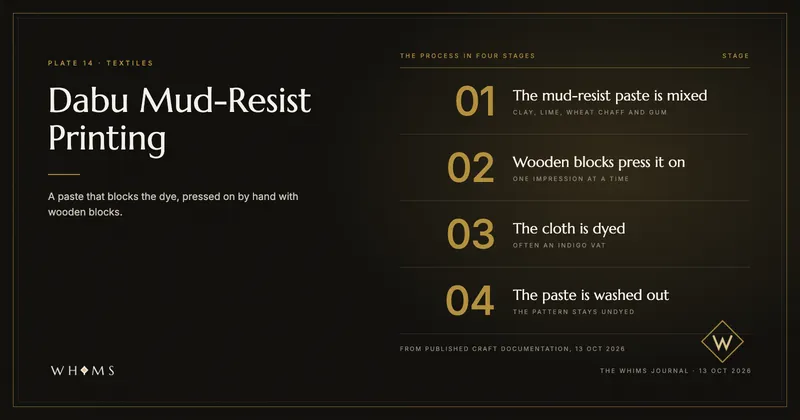
Dabu Mud-Resist Printing: How It Works and Why It Cannot Be Rushed
How the mud-resist paste, wooden blocks and dye bath combine, and what buyers should ask about a dabu print.
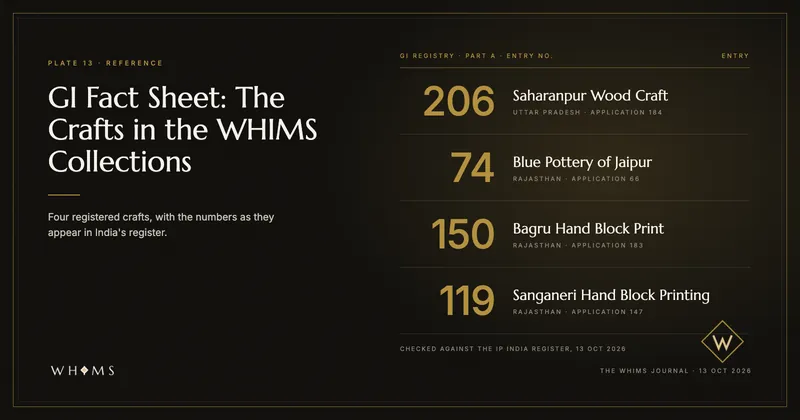
GI Fact Sheet: Registry Numbers for the Crafts in the WHIMS Collections
Application numbers, register entry numbers, years and states for the four registered crafts, read from India's register.

Choosing a Wholesale Home Decor Supplier: A First-Order Checklist
Eight checks before a first order, using public records and the official import guides.
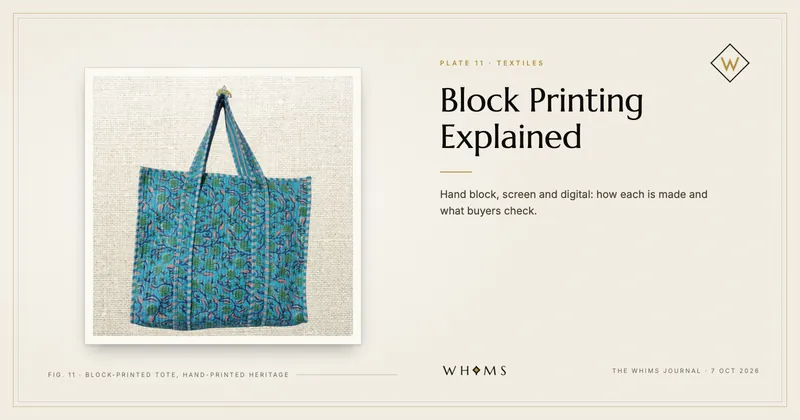
Block Printing Explained: Hand Block, Screen and Digital, and How to Tell Them Apart
How hand block printing works, how it differs from screen and digital printing, and what buyers look for.

FOB vs DDP: Which Shipping Term Suits a Small Importer?
What FOB and DDP mean under Incoterms 2020, and how to choose between them for a first import order.

What a Paid Sample Tells You Before a Wholesale Order
How a paid sample works, what to check when it arrives, and what it cannot tell you before a bulk order.
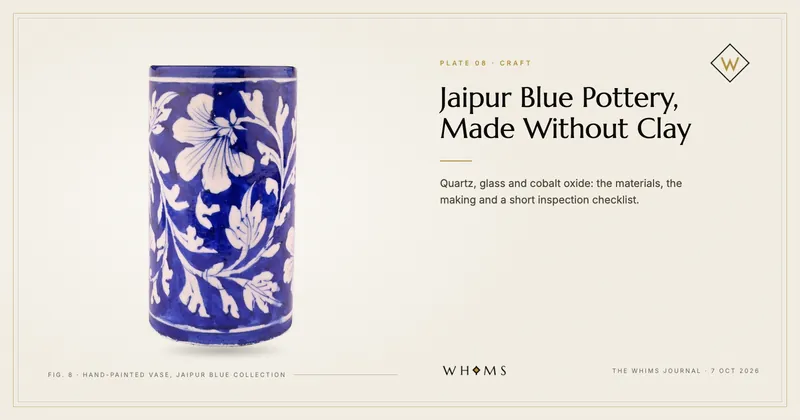
Jaipur Blue Pottery: A Buyer's Guide to Materials, Glaze and Inspection
What the craft is made of, how it is made, and what to check on a physical piece before you order.
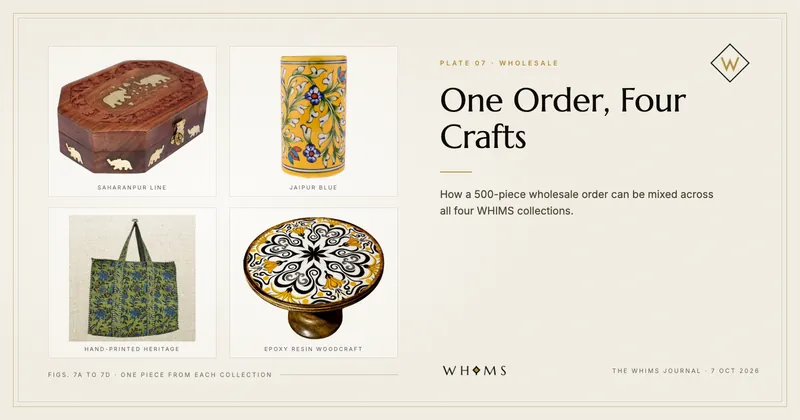
How Mixed-Collection Wholesale Works: One 500-Piece Order Across the Whole Range
How one 500-piece order can be mixed across the whole range, and how to plan it for a shop, hotel or gifting range.
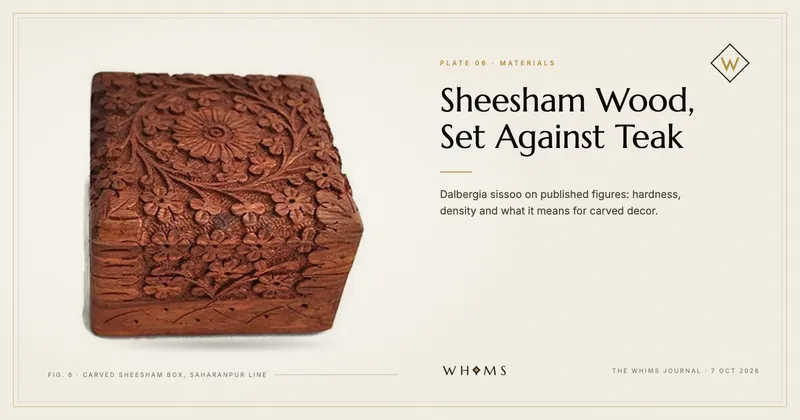
Sheesham Wood Explained, and How It Compares With Teak
What sheesham wood is, how hard and dense it is, and how it compares with teak on published figures.

How to Import Handmade Decor From India: A Step-by-Step Guide for Boutique Buyers
The steps from sample to customs clearance, and what the UK, EU and US official guides ask importers for.
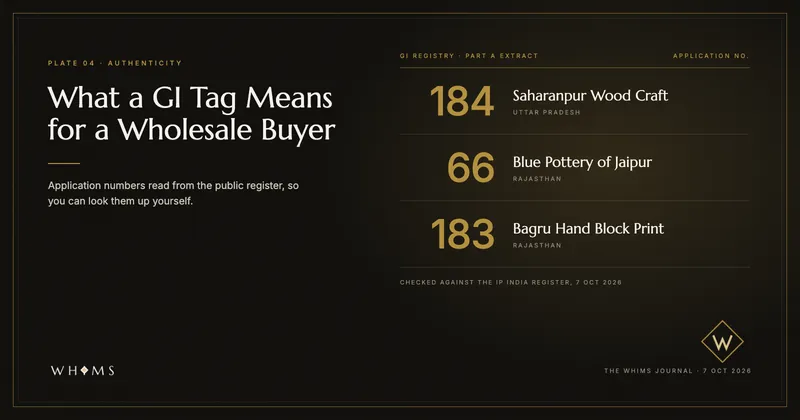
What a GI Tag Means for a Wholesale Buyer, and How to Verify One
What a Geographical Indication registration tells a buyer, the registry numbers behind each collection, and four steps to check a registration.
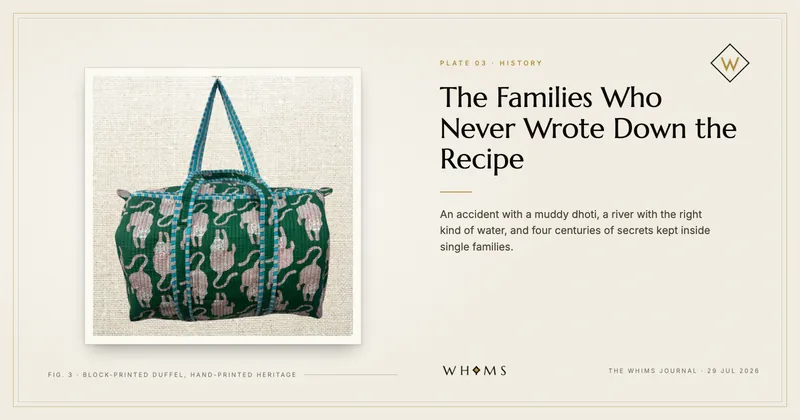
Bagru Block Printing and the Chhipa Community
Dabu mud‑resist printing, and more than four hundred years of block printing by the Chhipa community of Bagru.
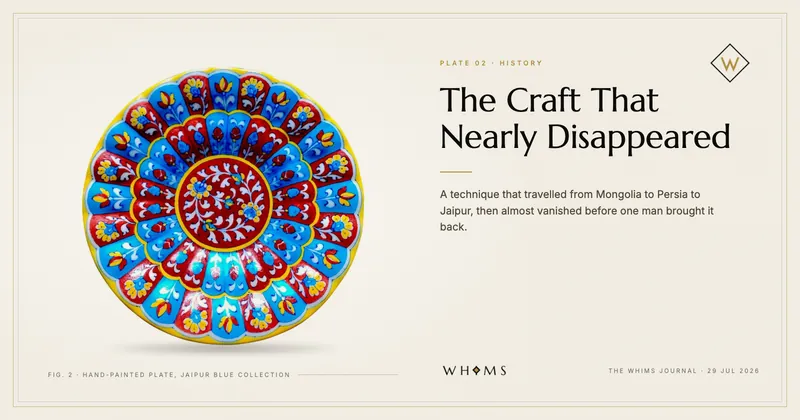
The Craft That Nearly Disappeared
A no‑clay technique with Persian and Chinese roots that had all but vanished from Jaipur by the 1950s, and was brought back.
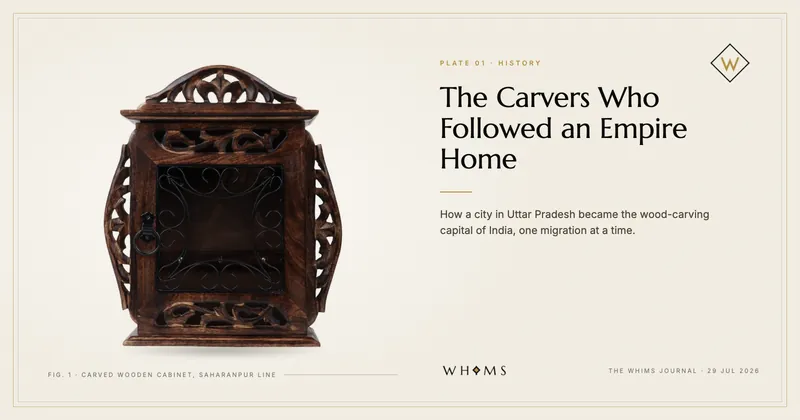
How Saharanpur Became a Wood-Carving Town
How carvers from Kashmir are said to have settled in Saharanpur about four hundred years ago, and the carving tradition that followed.